A drafty window can make your home uncomfortable, especially during cold weather. You may notice cold air near the window, curtains moving when the window is closed, or a room that feels colder than the rest of the house. These problems can also increase heating costs because your heating system may need to work harder to maintain a comfortable temperature.
The good news is that you may not need to replace the entire window. In many cases, a simple repair, such as replacing worn weatherstripping or sealing a gap around the frame, can help reduce drafts.
The key is to identify where the cold air is entering before spending money on supplies. This guide explains how to find the source of a draft, choose the right affordable repair, and avoid common mistakes.
Why Does Cold Air Come Through Windows?
Before fixing a drafty window, it helps to understand what is causing the problem. Different causes require different solutions, and using the wrong product may not solve the issue.
Common causes include:
- Worn weatherstripping: The material around a movable window sash can become compressed, loose, or damaged over time.
- Gaps around the frame: Old or cracked sealant may leave openings between the window frame and the surrounding trim.
- Poor window closure: A loose lock, dirty track, or misaligned sash may prevent the window from closing tightly.
- Single-pane or inefficient glass: Older glass can feel cold even when the window is properly sealed. This may be heat transfer rather than an actual air leak.
- Damaged frames: Warped wood, deteriorated materials, or structural gaps can allow outside air to enter.
Understanding the cause helps you choose the cheapest effective solution instead of purchasing products you may not need.
Step 1: Find the Exact Source of the Draft
The first step is to inspect the window carefully. You do not need expensive equipment to check for common air leaks.
Check the Window Edges
Close and lock the window. On a cold or windy day, slowly move your hand around the edges of the sash and frame to feel for moving air.
You can also hold a thin strip of tissue paper near the edges. If it moves noticeably when the window is closed, air movement may be present.
Keep the test simple and avoid open flames or candles because they create an unnecessary fire risk.
Inspect the Seals and Frame
Look for cracked caulk, missing weatherstripping, visible gaps, or damaged wood. Check whether the window closes evenly and whether the lock works properly.
If you feel cold near the center of the glass but cannot detect moving air around the edges, the problem may be heat transfer through the glass rather than a draft.
Why this step matters: You can avoid spending money on weatherstripping when the real problem is a gap in the frame or an inefficient window.
Step 2: Replace Worn Weatherstripping
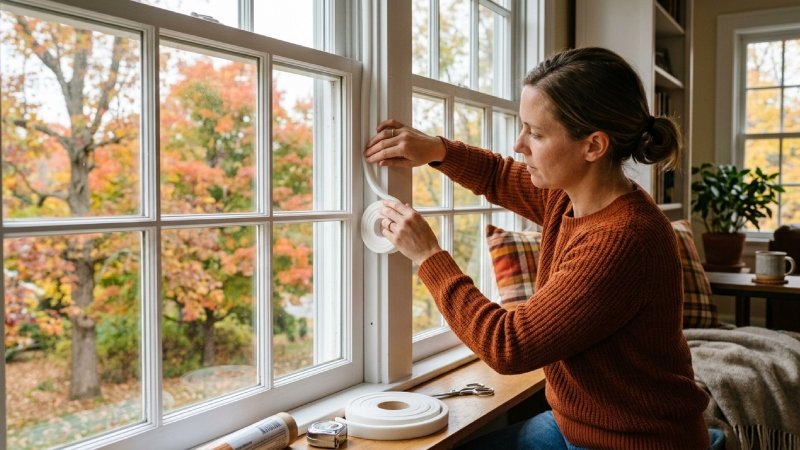
Weatherstripping is often a good low-cost repair when cold air enters between the movable sash and the window frame.
How to Fix It
- Open the window and examine the existing seal.
- Remove loose or damaged weatherstripping where necessary.
- Clean the surface and let it dry completely.
- Measure the gap and select compatible weatherstripping.
- Cut the material to the required length and install it according to the product instructions.
- Close and lock the window to check that the seal works without making the window difficult to operate.
Foam tape can work for some small gaps, while other window types require rubber, vinyl, or manufacturer-specific seals. Choose the right thickness and material for your window.
Common mistake to avoid: Do not apply thick weatherstripping simply because the gap looks large. If the material prevents the window from closing correctly, it may damage the seal or put pressure on the hardware.
Step 3: Seal Gaps Around the Fixed Window Frame
If cold air enters around the outside edges of the frame rather than between the moving parts, suitable caulk may help.
How to Apply Caulk
- Identify the gap between the fixed frame and the trim or wall.
- Remove loose or failing sealant as appropriate.
- Clean the surface and allow it to dry.
- Select caulk suitable for the material and whether the repair is indoors or outdoors.
- Apply the product according to the manufacturer’s directions and allow it to cure.
Caulk is intended for suitable fixed joints. It should not be used to seal movable window sections.
Important: Keep weep holes and other designed drainage openings clear. Blocking them can trap water and cause damage.
If a gap is large, the frame is rotting, or water enters during rain, investigate the underlying damage rather than covering it with sealant.
Step 4: Use Window Insulation Film for Cold Glass
Sometimes a window feels cold even when its seals are in good condition. Older single-pane windows, in particular, can transfer heat more readily than modern insulated glazing.
Window insulation film is a relatively inexpensive seasonal option. Many kits use transparent film attached to the interior frame to create an insulating air space.
Installation Tips
- Choose a kit designed for your window size and type.
- Clean and dry the frame before installation.
- Follow the supplied instructions for applying the tape and film.
- Use heat to tighten the film only if the manufacturer recommends it.
- Check that the film does not interfere with window operation or required ventilation.
Film can help reduce heat loss, but it will not repair a damaged frame or eliminate every air leak.
Step 5: Improve Comfort With Thermal Curtains
Thermal curtains can help reduce heat transfer through windows and make a room feel more comfortable during cold weather.
For better results, choose curtains that cover the window properly and close them during cold evenings. Open them during sunny winter days when sunlight can naturally warm the room.
However, curtains are not a substitute for repairing a noticeable air leak. If you can feel cold air moving through a gap, address the gap first.
Keep curtains away from heaters and other heat sources as required for safe operation.
Step 6: Check the Lock and Window Alignment
A window that does not close tightly may remain drafty even after you replace its weatherstripping.
Check the lock, tracks, hinges, and sash for dirt, looseness, or visible misalignment. Clean the tracks and tighten accessible loose screws if appropriate.
Some window designs allow minor adjustments to improve closure. Follow the manufacturer’s guidance rather than forcing the lock or sash.
If the window is warped, damaged, or difficult to operate, a professional may need to inspect it.
Which Cheap Window Fix Should You Choose?
The best repair depends on what you find during your inspection.
| What you notice | Suitable first step |
|---|---|
| Air enters between the sash and frame. | Inspect or replace weatherstripping. |
| A visible gap exists around fixed trim. | Use suitable caulk. |
| The glass feels cold, but no air leak is detected. | Consider insulation film or thermal curtains. |
| The window does not close securely. | Check the lock, tracks, and alignment. |
| Water damage, rotten wood, or persistent leaks | Investigate the damage and consider professional repair. |
Start with the smallest repair that addresses the actual cause. You may only need one product rather than several different materials.
How Much Does It Cost to Fix a Drafty Window?
The cost depends on the window’s condition, the size of the gap, the materials needed, and whether you do the work yourself.
Small weatherstripping or caulking repairs may cost relatively little if you already have basic tools. Window insulation kits and replacement hardware can cost more, while professional repairs may be necessary for damaged frames or difficult installations.
To keep costs down:
- Inspect the window before buying supplies.
- Measure the area so you purchase the correct amount.
- Compare products designed for your specific window.
- Avoid replacing a window before checking whether a simple repair will work.
- Get professional advice if the frame is damaged or the source of the leak is unclear.
Prices vary across the United States, so check current local store prices rather than relying on a single nationwide estimate.
Common Mistakes That Can Make the Problem Worse
Sealing every opening: Some openings, including weep holes, are designed to drain water. Keep them clear.
Using caulk on movable parts: This can stop a window from opening and closing correctly.
Ignoring condensation: Moisture on the glass may be caused by indoor humidity and cold surfaces, not an air leak. Persistent condensation or mold needs separate attention.
Buying insulation film before checking the seals: Film may help with heat loss through glass, but it does not fix every draft.
Forcing a damaged window closed: This can damage the frame, lock, or glass. Investigate the cause instead.
When Is Window Replacement Necessary?
Not every drafty window needs to be replaced. Repair may be enough when the problem comes from worn seals, minor gaps, or loose hardware.
Professional inspection may be worthwhile when the frame is badly warped or rotten, the glass is damaged, water repeatedly enters, or drafts continue after appropriate repairs.
If you are considering replacement, compare the cost of repairing the existing window with its condition, energy performance, and expected remaining life.
Frequently Asked Questions
What is the cheapest way to stop a drafty window?
The cheapest effective solution depends on the cause. Replacing worn weatherstripping or sealing a small gap around a fixed frame may be enough. Inspect the window before buying materials.
Does plastic film help with drafty windows?
Window insulation film can reduce heat loss through some windows when installed correctly. However, it is not a replacement for repairing damaged seals or major frame gaps.
Should I use caulk or weatherstripping?
Use weatherstripping for suitable gaps around movable window parts. Use caulk for appropriate fixed joints. The products are not interchangeable.
Why is my window cold even after I seal the gaps?
Cold glass can transfer heat away from the room even when the window is airtight. Insulation film, suitable curtains, or improved glazing may help, depending on the window.
Can I fix a drafty window without replacing it?
Yes, many minor drafts can be reduced with maintenance, weatherstripping, caulk, or insulation film. Severely damaged windows may require professional repair or replacement.
Final Thoughts
Fixing a drafty window cheaply starts with identifying the real problem. Worn weatherstripping, gaps around fixed frames, and loose window hardware each require a different approach.
Inspect the window first, choose the simplest suitable repair, and check the result before spending more money. This practical approach can improve comfort, reduce unwanted air leaks, and help you avoid unnecessary window replacement.