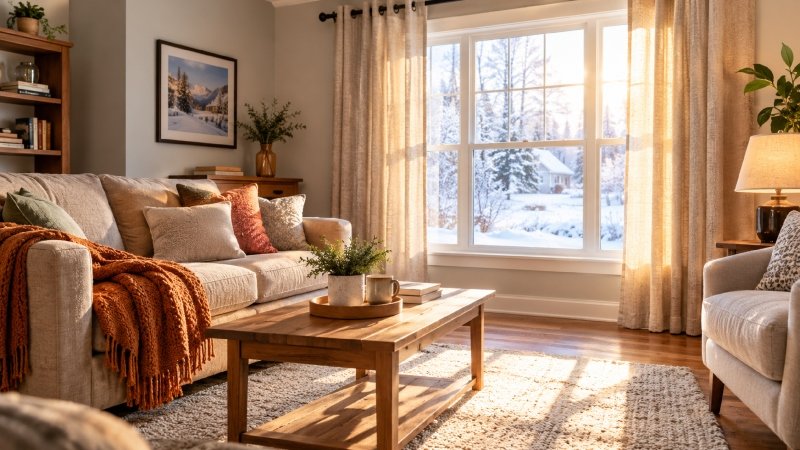
Keeping a house warm without turning on the heating system can be challenging during winter, particularly when cold air enters through doors and windows. If your home loses heat quickly, you may notice cold floors, chilly rooms, and uncomfortable indoor temperatures.
Fortunately, several home improvements can help your house retain warmth for longer. Simple changes, such as making better use of sunlight, sealing drafts, and improving window insulation, can make indoor spaces more comfortable without requiring a major renovation.
This guide explains how to keep a house warm without heating, which improvements are worth trying first, and when additional heating may be necessary for safety.
Why Does Your House Lose Heat?
Understanding how your home loses heat helps you choose the right solution.
Heat can escape through windows, exterior doors, roofs, walls, and floors. Poor insulation allows heat to pass through building materials more easily, while gaps around windows and doors can let cold outdoor air enter.
Other factors can also affect comfort. A room with cold flooring may feel uncomfortable even when the air temperature is reasonable. Dampness, inadequate insulation, and uneven air circulation can make the problem worse.
The best approach is to reduce unnecessary heat loss rather than relying on one quick fix.
1. Make the Most of Natural Sunlight
Sunlight can provide useful warmth during sunny winter days. When sunlight passes through a window, it can warm floors, furniture, and other surfaces inside your home.
To take advantage of this natural warmth, open curtains on sun-facing windows during the day. Keep nearby furniture arranged so it does not unnecessarily block sunlight.
Before sunset, close the curtains again to create an additional barrier between the room and the colder window.
This method works best when your windows receive direct sunlight. On cloudy days or in rooms with limited sun exposure, the benefit may be smaller.
Best for: Homes with sun-facing windows and rooms that receive direct winter sunlight.
2. Seal Drafts Around Doors and Windows
Unwanted air leakage is one of the most practical problems to address when trying to keep a house warm.
Inspect exterior doors and windows for damaged seals, visible gaps, and areas where you can feel cold air entering. Pay particular attention to the bottom of exterior doors, where even a small gap can allow noticeable drafts.
Depending on the location, you may be able to:
- Install weatherstripping around movable door and window joints.
- Fit a door sweep to an exterior door with a bottom gap.
- Apply suitable caulk to small, stationary gaps around frames.
- Use a removable draft stopper as a temporary measure.
Choose the correct material for each type of gap. Weatherstripping is designed for moving parts, while caulk is generally used for stationary joints.
Sealing drafts can improve comfort and reduce unwanted air exchange, but it will not correct every insulation problem. Keep required ventilation openings clear, especially around fuel-burning appliances.
3. Use Thick Curtains to Reduce Heat Loss
Windows can be a weak point in an older or poorly insulated home. Even when they are properly closed, cold glass may make the area nearby feel uncomfortable.
Thick, lined, or thermal curtains can help reduce heat transfer through windows. Their effectiveness depends on the fabric, fit, window construction, and installation.
For better results, choose curtains that cover the window adequately and close them after sunset. During sunny periods, open them when direct sunlight can warm the room.
If you cannot afford new curtains, start by improving the fit of the ones you already have. Suitable insulated blinds or removable window insulation products may provide additional options.
Keep curtains away from open flames and follow the required clearance instructions for any heating equipment.
4. Add Rugs to Cold Floors
Cold tile, stone, and other hard flooring surfaces can make a room feel uncomfortable during winter. Rugs provide a softer, more comfortable surface and can offer a small amount of additional insulation.
Place rugs in frequently used areas, such as beside your bed, in the living room, or near a seating area.
A rug with a suitable underlay may improve comfort further, particularly on floors that feel cold to the touch.
However, rugs do not significantly increase the temperature of an entire room. Their main benefit is making the floor more comfortable while helping reduce direct contact with a cold surface.
Use nonslip backing where appropriate, and ensure rugs do not create trip hazards or interfere with doors.
5. Improve Insulation in the Attic
If your house loses warmth quickly despite having closed windows and doors, inadequate insulation may be part of the problem.
In many homes, the attic or roof space is an important area to inspect because heat can escape through the upper part of the building.
Look for uneven insulation coverage, obvious gaps, or areas where insulation appears damaged. If you cannot safely access the attic, consider arranging a professional inspection.
Depending on your home, improvements may include:
- Adding suitable attic insulation.
- Sealing appropriate air leaks before installing additional insulation.
- Correcting gaps around accessible penetrations.
- Checking whether existing insulation is suitable for your climate and building design.
Insulation requirements vary by climate zone and construction type. The correct insulation level for a home in a cold northern state may differ from what is appropriate in a milder part of the United States.
Insulation can require an upfront investment, but it may improve comfort throughout the year by slowing heat transfer.
6. Close Doors to Unused Rooms Carefully
If you spend most of your time in a few rooms, closing the doors to unused spaces may help you concentrate on making the occupied areas more comfortable.
For example, closing the door to a spare bedroom can reduce air movement between that room and the rest of the house.
However, this approach does not work equally well in every home. Central heating systems, return-air pathways, and ventilation arrangements can be affected by closed doors.
Do not block return-air grilles, ventilation openings, or combustion-air supplies. If your home uses a forced-air heating system, check the manufacturer’s guidance before restricting airflow between rooms.
The goal is to manage comfort without interfering with the home’s ventilation or heating design.
7. Dress in Warm Layers
One of the simplest ways to feel warmer without increasing your home’s temperature is to dress appropriately for the conditions.
Several comfortable layers can trap air close to your body. Warm socks, slippers, a sweater, and suitable indoor clothing may help you stay comfortable while sitting or working.
Blankets can also provide warmth when you are resting.
Choose clothing and bedding that suit the actual indoor temperature rather than assuming the room is safe simply because you feel warm under a blanket.
Young children, older adults, and people who are particularly vulnerable to cold may need additional protection. Clothing is helpful, but it cannot replace adequate indoor warmth during severe winter weather.
8. Reduce Drafts Around the Fireplace
An unused fireplace or chimney may allow air to move between the outdoors and your home, depending on its construction and condition.
If you suspect a draft, inspect the area for damaged seals and gaps around the fireplace surround.
A suitable fireplace cover may help reduce unwanted airflow when the fireplace is completely out of use. However, the correct solution depends on whether the chimney serves an active fireplace or a fuel-burning appliance.
Never block a chimney or flue while a fire is burning or while an appliance depends on it for ventilation. Improper sealing can cause dangerous combustion gases to accumulate indoors.
If you are uncertain about your fireplace or chimney, consult a qualified professional before making changes.
9. Use Ceiling Fans to Circulate Warm Air
Some ceiling fans have a reverse setting that allows them to rotate in the opposite direction at a low speed. In suitable rooms, this can help move warm air that has collected near the ceiling back into the occupied space.
Check the fan manufacturer’s instructions to confirm the correct winter setting.
Use a low speed to avoid creating a noticeable breeze, which can make people feel colder.
A ceiling fan does not generate heat, and reversing its direction will not solve poor insulation or significant drafts. It may simply help distribute existing warmth more evenly.
If the fan makes the room less comfortable, switch it off.
10. Control Moisture Without Sacrificing Ventilation
Dampness can make a house feel uncomfortable and may indicate a problem that needs attention.
Look for condensation on windows, persistent damp patches, musty smells, and signs of leaks. These issues may be associated with excessive indoor moisture, inadequate ventilation, or water entering the building.
Practical steps include using bathroom and kitchen exhaust fans when appropriate, repairing leaks, and maintaining suitable ventilation.
A dehumidifier may help in some circumstances, although its suitability depends on the room and climate. It should not be treated as a substitute for repairing water intrusion or improving inadequate insulation.
Avoid sealing every opening in an attempt to retain warmth. Proper ventilation remains important for indoor air quality and moisture control.
Which Improvements Should You Try First?
The best solution depends on your home’s condition and your budget.
| Your problem | Practical first step |
|---|---|
| Cold air beneath an exterior door | Inspect the gap and consider a door sweep |
| Drafts around window frames | Check seals and install suitable weatherstripping |
| Cold windows at night | Close well-fitted curtains |
| Cold tile or stone floors | Add rugs with suitable nonslip backing |
| House loses warmth throughout the day | Investigate insulation and air leakage |
| Condensation or damp patches | Identify the moisture source and improve suitable ventilation |
| Room feels cold despite being sealed | Check insulation, windows, and other sources of heat loss |
Start with the simplest appropriate improvement. If the house remains cold, investigate the underlying cause rather than repeatedly purchasing temporary products.
Can You Keep a House Warm Without Heating During Winter?
You can often make a home more comfortable without using the heating system as much, particularly during mild weather. Sunlight, curtains, draft sealing, insulation, and warm clothing can all help.
However, these methods do not produce a dependable source of heat. During prolonged freezing weather, indoor temperatures can become unsafe even in a well-insulated home.
If your house becomes dangerously cold, use a safe heating source. Never use a barbecue, outdoor camping stove, or outdoor fuel-burning heater inside a home. Do not use an oven or stovetop to heat rooms because doing so can create fire and carbon monoxide hazards.
Fuel-burning appliances should be installed and maintained correctly, and working carbon monoxide alarms should be used as recommended.
The priority is to reduce unnecessary heat loss while keeping the home at a safe temperature.
Frequently Asked Questions
What is the cheapest way to keep a house warm without heating?
Start with free or inexpensive changes: open curtains during sunny periods, close them after sunset, wear warm layers, and check for obvious drafts. If a door or window has a damaged seal, repairing it may offer a practical improvement.
Do candles help heat a room?
Candles release some heat, but they are not a practical way to heat a home. They also introduce a fire risk, particularly when left unattended or placed near curtains, bedding, and other combustible materials.
Do rugs really help keep a room warm?
Rugs can make cold floors feel more comfortable and provide a small insulating layer. They have a more noticeable effect on underfoot comfort than on the overall air temperature of a room.
Do thermal curtains make a difference?
Properly fitted thermal curtains can reduce heat transfer through windows. Results depend on the window, curtain design, and how well the curtains fit around the opening.
How can renters keep a house warm without permanent changes?
Renters can try draft stoppers, removable window insulation products suitable for their windows, thick curtains, rugs, and warm bedding. Ask the landlord before making permanent changes to doors, windows, or insulation.
Is it safe to keep the heating off during winter?
That depends on the outdoor conditions, indoor temperature, the building, and the people living there. Passive measures may be enough during mild weather, but they cannot guarantee safe temperatures during severe cold. Use appropriate heating when necessary and protect vulnerable household members.
Final Thoughts
Keeping a house warm without heating is mainly about reducing heat loss and making better use of the warmth already available.
Start by opening curtains when sunlight is available, sealing unwanted drafts, using suitable window coverings, and improving comfort on cold floors. If your home continues to lose warmth quickly, investigate insulation and other underlying problems.
These practical improvements can make winter living more comfortable and may reduce the need for heating. However, they cannot always replace a heating system, especially during freezing weather. Keeping your home safe and adequately warm should always come first.