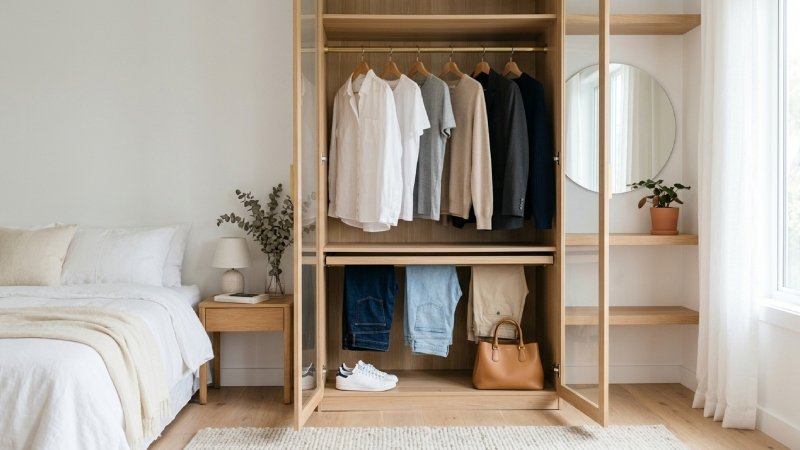
Getting dressed every day can be easier when you have a wardrobe filled with clothes that work well together. A capsule wardrobe focuses on useful, versatile pieces instead of having a closet full of clothes that are rarely worn.
You do not need to buy a completely new wardrobe. You can start with the clothes you already have and slowly build a collection that fits your lifestyle.
What Is a Capsule Wardrobe?
A capsule wardrobe is a carefully chosen collection of clothing that can be mixed and matched to create different outfits.
There is no fixed number of clothes that every person needs. The right size depends on your lifestyle, work, climate, personal style, and how often you do laundry.
The main idea is to keep clothes that you actually wear and that work well with other items.
1. Start With Clothes You Already Wear
Before buying anything, look at your current wardrobe.
Keep the pieces you wear regularly and feel comfortable in. Put aside clothes that no longer fit, are uncomfortable, or have not been worn for a long time.
This gives you a better idea of what is missing instead of encouraging unnecessary shopping.
2. Choose Easy-to-Match Colors
A simple color palette can make outfit planning easier.
Colors such as black, white, navy, gray, beige, and denim are often easy to combine. You can also add a few colors you personally enjoy.
You do not have to wear only neutral colors. The important thing is that your clothes work well together.
3. Choose Versatile Tops
A few versatile tops can be used for many different outfits.
For example, a plain T-shirt can be worn with jeans for a casual day. The same T-shirt can also be worn under a jacket for a more polished look.
A simple shirt, comfortable sweater, and a few everyday tops can give you plenty of combinations.
4. Keep Your Bottoms Simple
Choose bottoms that work with several tops in your wardrobe.
A comfortable pair of jeans, neutral trousers, and another casual option can cover many everyday situations. Choose styles that fit your personal taste rather than buying something simply because it is popular.
Good fit and comfort are more important than having many options.
5. Add Useful Layers
Layers can make simple outfits more flexible.
A cardigan, denim jacket, blazer, sweater, or lightweight coat can be worn over different tops. The right layers can also help you adjust your outfit when the weather changes.
Choose layers that match several pieces you already own.
6. Choose Shoes for Your Lifestyle
You do not need a large shoe collection to create different outfits.
For many people, comfortable everyday shoes, a casual pair, and one dressier option can cover most occasions. Your choices will depend on your work, activities, climate, and personal style.
Comfort should be considered along with appearance, especially for shoes you plan to wear regularly.
7. Keep Seasonal Clothing Practical
Your wardrobe should suit the weather where you live.
During warmer months, lightweight tops and breathable fabrics may be more comfortable. In colder weather, sweaters, coats, and other warm layers can become more useful.
You can store clothing that is not suitable for the current season if your closet has limited space.
8. Use Accessories for Variety
Accessories can change the appearance of a basic outfit without requiring another complete set of clothes.
A belt, scarf, handbag, watch, or simple jewelry can add a different touch to an outfit.
Choose accessories that you genuinely enjoy using rather than collecting items that stay unused.
9. Build Your Wardrobe Around Your Lifestyle
There is no single capsule wardrobe that works for everyone.
If you work in an office, you may need more shirts, trousers, or smart layers. If you work from home, comfortable everyday clothing may be more important.
Someone who travels often may also prefer lightweight and easy-care clothing.
Think about what you actually do during a normal week and choose clothes around those needs.
10. Think Before Buying Something New
A capsule wardrobe does not mean you can never buy new clothes. It simply encourages more thoughtful shopping.
Before buying something, ask yourself:
- Does it fit comfortably?
- Can I wear it with clothes I already own?
- Will I actually wear it regularly?
- Is it suitable for my lifestyle?
- Do I already own something similar?
These questions can help prevent unnecessary purchases.
11. Focus on Fit and Quality
A good wardrobe is not only about the number of clothes you own.
Pay attention to how clothing fits and feels. Check the fabric, stitching, care instructions, and overall construction before buying.
A basic item that fits well and is comfortable can be more useful than a complicated piece that you rarely wear.
12. Create Simple Outfit Combinations
Once you have your main pieces, try putting together complete outfits.
For example, you could combine:
Jeans, a T-shirt, and sneakers for a casual day.
Trousers + Shirt + Loafers for a smarter look.
Jeans, a sweater, and boots for cooler weather.
These simple combinations can help you see which clothes work together and what your wardrobe may actually be missing.
How to Start a Capsule Wardrobe on a Budget
You do not need to spend a lot of money to create a capsule wardrobe.
Start by using what you already own. Replace only items that no longer fit, are worn out, or do not meet your needs.
When you do shop, look for pieces that can be worn in several ways. Buying fewer useful items can be more practical than regularly buying clothes that only work with one outfit.
Final Thoughts
A capsule wardrobe is mainly about making your closet more useful and easier to manage. You do not need a specific number of clothes or a particular style to make it work.
Start with the pieces you already wear, choose items that can be mixed and matched, and buy new clothes only when they add real value to your wardrobe.